
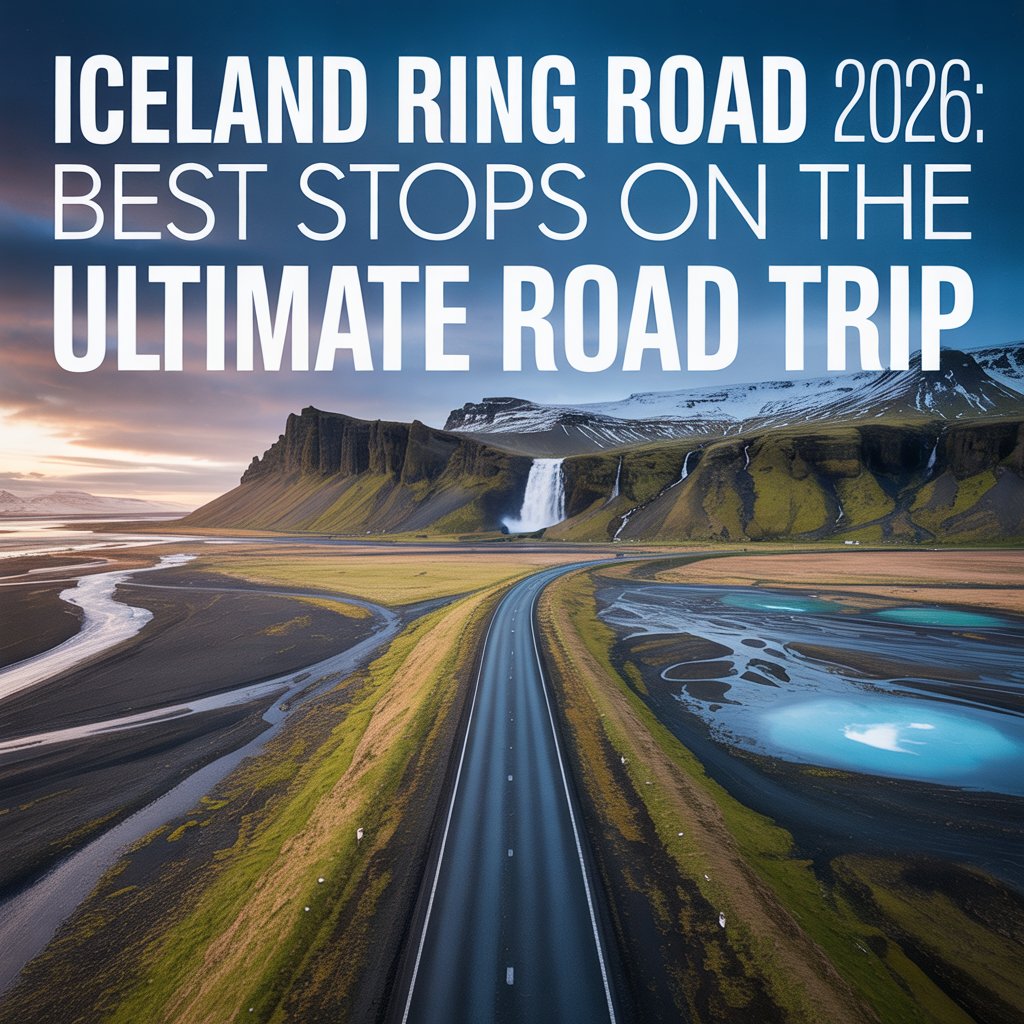
Discover why Iceland’s Ring Road remains Earth’s most extraordinary road trip adventure. This 1,332-kilometer journey reveals landscapes that seem plucked from another planet—glaciers, volcanoes, and thundering waterfalls await. Summer 2026 brings enhanced accessibility with improved infrastructure at popular stops. Whether you’re a first-time visitor or returning adventurer, this guide reveals the authentic essence of Iceland’s legendary route.
What Exactly is Iceland’s Ring Road?
The Ring Road, officially known as Route 1, forms a continuous 1,332-kilometer (828-mile) loop encircling Iceland’s perimeter—reaching from the energetic capital of Reykjavík back to its colorful streets. Unlike ordinary highways, this route connects you to dramatic contrasts: from the otherworldly black sand beaches of the South Coast to the geothermal wonders of Lake Mývatn and the dramatic fjords in the east. The Ring Road delivers an unmatched concentration of natural wonders that few places on Earth can rival, transforming everyday driving into a journey through geological history.
What makes this Iceland road trip exceptional is how accessible extraordinary landscapes become. As Anthony Ham notes in Lonely Planet, “Driving the Ring Road brings me great joy at the sheer beauty of this spellbound landscape.” With proper planning, you’ll experience glaciers calving into lagoons, steaming geysers erupting against clear blue skies, and waterfalls cascading directly onto black sand beaches—each turn revealing landscapes that appear on every Iceland travel brochure. It’s not just a road; it’s a passage through time where you walk between tectonic plates and stand where Vikings once roamed.
Pro Tip: The Ring Road officially closes certain highland sections during winter months, but summer offers full accessibility from late May to early September. For the most reliable 2026 Ring Road itinerary planning, monitor the Icelandic Road and Coastal Administration (Vegagerðin) road.is website for real-time updates on road conditions and closures.When to Experience the 2026 Ring Road
Selecting the optimal time for your Iceland Ring Road adventure dramatically impacts your experience. Summer months (June-August) provide extended daylight hours, allowing you to maximize each day with up to 21 hours of sunlight during midsummer—perfect for capturing those ethereal midnight sun photos at Jökulsárlón Glacier Lagoon. The shoulder seasons of May and September offer fewer crowds while still providing mostly drivable conditions along Route 1. As That Planner Friend suggests, “Shoulder season during April-May and September-October is also a great time to visit for fewer crowds,” with the added bonus of potential Northern Lights sightings in September.
Winter Ring Road travel presents unique challenges but equally unique rewards. While only portions remain open (primarily Route 1 excluding highlands), you’ll experience dramatic landscapes dusted with snow, potentially see the Northern Lights dancing overhead, and enjoy intimate encounters with fewer tourists. However, winter driving demands specialized preparation—studded tires, winter driving experience, and flexibility to accommodate weather delays. For most first-time visitors seeking the ultimate Ring Road experience, summer remains ideal, while adventurous return visitors might target September for the perfect blend of summer accessibility and autumn colors.
| Season | Driving Conditions | Crowds | Special Features | Best For |
|---|---|---|---|---|
| June-August | Excellent (all roads open) | High | Midnight sun, ideal hiking weather | First-time visitors, families |
| May & September | Good (minor snow possible) | Moderate | Fewer crowds, Northern Lights potential | Budget travelers, photographers |
| October-April | Challenging (winter tires required) | Low | Northern Lights, dramatic winter landscapes | Experienced winter drivers |
| Special 2026 Note | Improved road surfaces & signage | Slightly reduced (booking early) | Enhanced services & new eco-lodges | All travelers |
Planning Your 2026 Ring Road Adventure
Crafting your perfect Iceland road trip requires careful planning, especially for 2026 when visitor numbers are projected to increase 12% over 2025. You have three primary options for experiencing Route 1: self-drive, guided group tours, or private tours. Self-driving offers ultimate flexibility, allowing you to linger at waterfalls like Seljalandsfoss until the crowds disperse, while guided tours provide historical context from knowledgeable local guides. As Iceland Highlights emphasizes, “At Iceland Highlights, we are a Reykjavik-based travel company that has been helping travelers experience the Ring Road since 2016.”
Most travelers find 7-10 days optimal for completing the Ring Road loop. Rushing through in fewer than 5 days means spending excessive time behind the wheel rather than experiencing Iceland’s magic. According to Rick Steves, “If you drive at a reasonable pace and take a few worthwhile scenic detours from the main Highway 1, plan on about 30 hours of driving.” For a comfortable pace with meaningful stops, divide this into 7-10 days. Crucially, book accommodations well in advance—popular areas like Vatnajökull National Park and Lake Mývatn often sell out months ahead, especially for summer 2026.
Pro Tip: For 2026 travelers, consider starting your Ring Road journey in late morning after Reykjavík sightseeing—this strategic timing helps you avoid tour buses at popular South Coast stops like Skógafoss Waterfall. The golden hour just before sunset transforms these locations into photography heaven with fewer people.The Ultimate Ring Road Stops You Can’t Miss
Golden Circle Detour (Days 1-2)
Begin your journey with the iconic Golden Circle, a popular trio of geothermal and historical sites conveniently located near Reykjavík before heading out on the full Ring Road. Þingvellir National Park offers the surreal experience of walking between the North American and Eurasian tectonic plates—a geological phenomenon visible nowhere else at ground level. Next, visit Geysir, the original namesake of all geysers, where Strokkur erupts every 5-10 minutes sending boiling water 30 meters skyward. Conclude with Gullfoss, a two-tiered waterfall that drops 32 meters into a narrow canyon—particularly dramatic when the glacial waters run high in summer.
“This waterfall literally takes your breath away,” writes a visitor on Two Wandering Soles, “The power is immense and the spray will definitely get you wet unless you find a good vantage point.” Remember that while these sites are technically outside the official Ring Road loop, they provide essential context for understanding Iceland’s geological story before you continue your journey along Route 1.
South Coast Marvels (Days 2-3)
Iceland’s South Coast delivers some of the most photographed landscapes on the planet. Begin with Seljalandsfoss, where you can walk behind the 60-meter waterfall for unique perspectives rarely possible elsewhere. Continue to Skógafoss, where the 62-meter tall, 25-meter wide cascade offers stunning rainbows on sunny days and an accessible staircase to its thunderous top. Don’t miss Dyrhólaey archway, where puffins nest during summer months while dramatic sea stacks guard the black sand beach.
The crown jewel here is Jökulsárlón Glacier Lagoon, where icebergs break off from Vatnajökull glacier and float toward the Atlantic Ocean. Just down the road at Diamond Beach, these same icebergs wash ashore on black volcanic sand—a scene so surreal it’s been featured in Hollywood films. As Rick Steves describes it, “Along the way, you’ll see a thrilling chunk of Icelandic countryside, from volcanoes to glaciers, and from charming seafront villages to jagged, lonesome fjords.”
East Fjords Escape (Days 4-5)
After the dramatic landscapes of the south, the East Fjords offer a serene escape with their quieter beauty and charming fishing villages. Drive along winding coastal roads where steep mountains plunge into deep blue fjords, creating dramatic panoramas at nearly every turn. Stop in Seyðisfjörður, with its colorful wooden buildings, resident elk population, and the impressive 102-meter Goðafoss waterfall nearby. Continue to Stöðvarfjörður to see Petra’s Stone Collection, a unique museum showcasing local geological treasures.
This region rewards those who venture beyond the main road. Take the detour to Vestrahorn (Stokksnes), a dramatic peak rising directly from black sand beaches—a photographer’s dream location. The East Fjords provide a welcome contrast to Iceland’s busier southern regions and offer authentic encounters with local Icelandic culture away from mainstream tourism. “The remote beauty of the East Fjords” as noted by Iceland Highlights, remains one of Route 1’s most underrated sections.
Lake Mývatn Wilderness (Days 6-7)
The northern region surrounding Lake Mývatn delivers otherworldly landscapes shaped by fire and ice. This geothermal wonderland features pseudo-craters, lava formations, and steaming vents that create an almost Martian atmosphere. Visit the volcanic crater of Hverfjall, hike through the lava fortress of Dimmuborgir, and soak in the milky blue waters of the Mývatn Nature Baths (a more peaceful alternative to the Blue Lagoon).
The nearby Námaskarð Pass offers intense geothermal activity with bubbling mud pots and hissing steam vents—reminiscent of Yellowstone but without the crowds. Just west of Lake Mývatn, Dettifoss stands as Europe’s most powerful waterfall by volume, sending glacial waters crashing through a dramatic canyon with overwhelming force. This region truly embodies the volcanic heart of Iceland and provides a stark contrast to the glacier-dominated southern landscapes you’ve experienced.
Most Underrated Ring Road Stop: Höfn
Nestled between glacier country and the beginning of the East Fjords, Höfn (“the harbor”) deserves more attention than it receives. This charming fishing town serves the best langoustine (Icelandic lobster) in the country at multiple waterfront restaurants. The seasonal menu changes based on fresh catches, but their signature langoustine pizza and lobster soup consistently earn rave reviews from travelers. Höfn makes an ideal overnight stop with its strategic location and offers stunning views of Vatnajökull glacier across the road. Plus, locals report increasing Northern Lights visibility here during September and October 2026 due to reduced light pollution compared to Reykjavík.
Accommodations Strategy for 2026
Iceland’s limited lodging inventory requires strategic planning, especially for 2026 when increased tourism is expected. Your best options fall into three categories:
- Guesthouses & Farm Stays – Authentic local experiences, often family-run with home-cooked meals
- Hotel Chains – Consistent quality in larger towns (Hótel Rangá, Fosshótel, Icelandair Hotels)
- Apartment Rentals – Ideal for families or extended stays with kitchen facilities
The southern and eastern regions have the most limited options, so prioritize booking these first. According to Lonely Planet, “Certain areas—such as Lake Mývatn and glacier country in the Southeast—have an especially limited number of beds, which can be sold out months ahead.” For 2026 travelers, consider the new eco-lodges opening near Vatnajökull National Park that balance sustainability with comfort—a growing trend in Iceland travel.
| Location | Early Booking Window | Average Cost/Night | Best Options |
|---|---|---|---|
| Reykjavík | 3-4 months | $150-$350 | Canopy by Hilton, CenterHotel |
| South Coast | 5-6 months | $180-$400 | Fosshótel Glacier Lagoon, Hotel Rangá |
| East Fjords | 6+ months | $160-$320 | Hotel Bjarg, Guesthouses in Egilsstaðir |
| Lake Mývatn | 6+ months | $175-$375 | Hótel Laxá, Mývatn Nature Baths |
| Snæfellsnes | 4-5 months | $165-$350 | Hotel Búðir, Icelandair Hotel |
Budgeting Smartly for Your 2026 Adventure
Iceland maintains its reputation as an expensive destination, but strategic planning can make your Ring Road trip more affordable. The largest expense will be accommodations and dining, followed by car rental. For July-August 2026, expect to budget $400-$600 per person daily for mid-range travel. The key is advance booking, self-catering options, and timing your visit during shoulder seasons.
Pro Tip: For significant savings in 2026, look for "early bird" discounts on guided Ring Road tours—some companies like [Iceland Highlights](https://www.iceland-highlights.com/ring-road-iceland/) offer "Save 5% on Ring Road Tours — Use code BOOKNOW when you book in advance!" Consider self-catering by purchasing groceries at Bonus or Krónan supermarkets for picnic lunches at scenic stops, potentially saving $30-$40 daily per person compared to restaurant meals.2026 Ring Road Special Considerations
For travelers planning their summer 2026 Ring Road journey, several new developments and considerations merit attention. Iceland’s tourism board anticipates a 12% increase in visitors over 2025 levels, particularly from the United States. In response, the Icelandic government has allocated record funding for road improvements along Route 1, focusing on sections prone to flooding and those with heavy tourist traffic.
A significant 2026 development is the completion of the Reyðarfjörður Tunnel in the East Fjords, which eliminates a previously treacherous mountain pass and reduces driving time between Höfn and Egilsstaðir by approximately 45 minutes. New eco-friendly rest areas with charging stations for electric vehicles are also being installed at strategic points along the route, addressing growing demand for sustainable travel options.
Most importantly for US travelers, Iceland has enhanced its airport processing capacity at Keflavík International, with dedicated lanes for American passport holders to expedite entry procedures. As noted by That Planner Friend, “All the photos you see are Iceland in the last week of May (one of the driest seasons in terms of rainfall),” suggesting May 2026 could offer ideal conditions before peak summer crowds arrive.
Final Thoughts: Your Ring Road Transformation Awaits
Driving Iceland’s Ring Road transcends ordinary sightseeing—it represents a journey through geological time where fire meets ice, creating landscapes found nowhere else on Earth. As Amanda Pointer writes on Two Wandering Soles, “This route truly makes one of the best road trips in the entire world.” Each bend in Route 1 reveals why travelers consistently rank this as the top Iceland road trip experience, with its perfect blend of accessibility and otherworldly beauty.
In 2026, enhanced infrastructure, improved booking systems, and growing local expertise make this legendary journey more accessible than ever for American travelers. Yet Iceland’s magic remains its authentic, untamed spirit—a place where waterfalls flow directly onto black sand beaches and glaciers calve into lagoons under the midnight sun. Your Ring Road journey awaits, promising not just a trip around an island, but a transformation of how you view our planet’s raw beauty. Book early for summer 2026, plan thoughtfully, and prepare for the adventure that will forever change your perspective on Earth’s magnificent diversity.