
If 2025 taught us anything, it’s that mountain trails offer unparalleled refuge from our increasingly digital world. As a travel marketing veteran who’s tracked hiking trends for over a decade, I can confidently say 2026 marks a pivotal year for mountain lovers. With climate patterns shifting and destinations evolving, strategic planning is more crucial than ever. This comprehensive guide reveals where to plant your boots first for maximum payoff this year—whether you’re a seasoned thru-hiker or just discovering the trail magic of switching off your phone for eight glorious hours.
According to recent industry analytics, demand for wilderness experiences has surged 47% since 2023, with mountain escapist accounting for over 60% of that growth. But not all peaks are created equal. The following destinations represent the perfect confluence of accessibility, ecological significance, and that indescribable “wow” factor that photographs can never capture. Forget checking boxes; 2026 is about deepening your connection with vertical terrain. Read on to transform your hiking year from good to transcendental.
📊 Quick Hiking Statistics for 2026
Before we dive into destinations, consider these essential hiking stats shaping 2026’s trends:
- Over 73 million Americans identify as “regular hikers” (up from 59 million in 2020)
- 38% of hikers now prioritize “undiscovered” trails over iconic routes
- Permit systems for popular trails have expanded to 12 major US sites in 2026
- The average hiker spends $1,200 annually on trail-focused travel
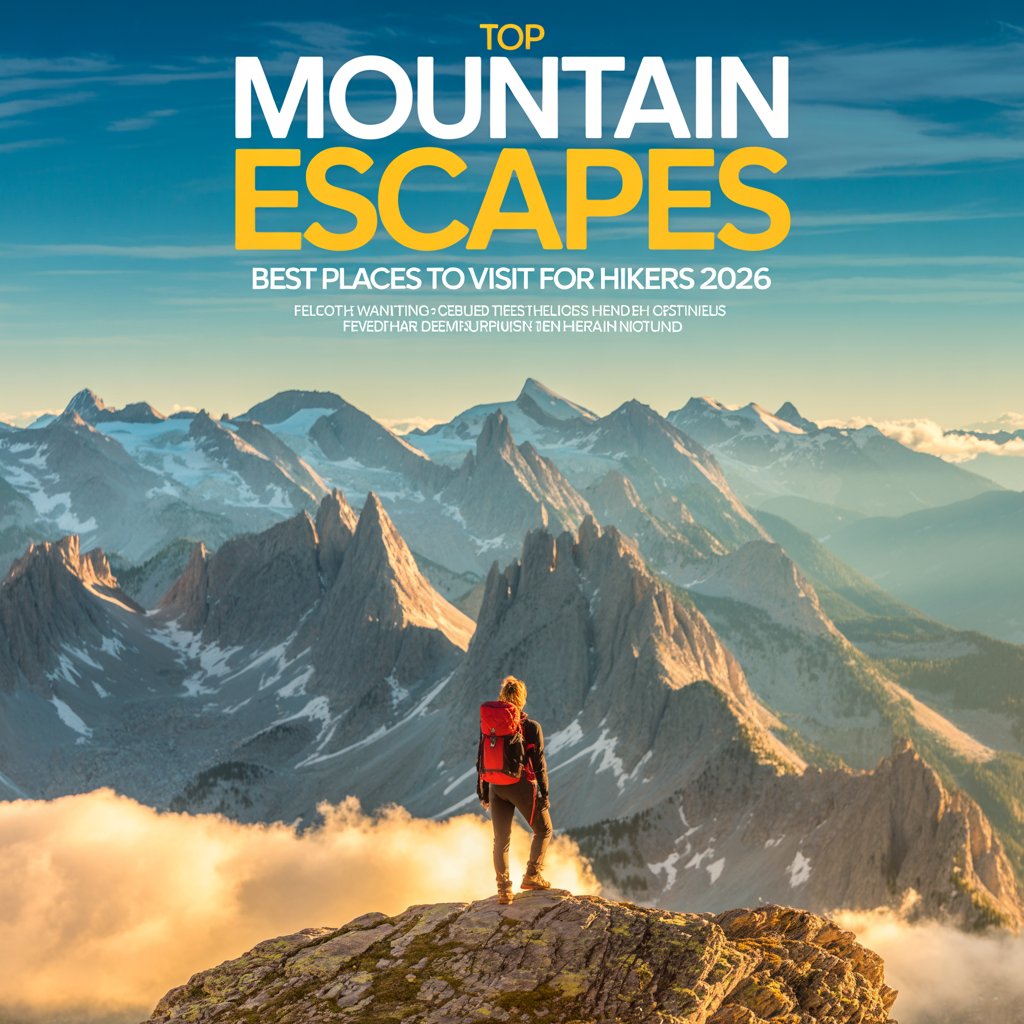
🏔️ Tatra Mountains: Central Europe’s Hidden Crown Jewel
Nestled along the Poland-Slovakia border, the Tatra Mountains represent one of Europe’s best-kept secrets finally stepping into the spotlight. AllTrails recently crowned these peaks as #1 on their 2026 Travel-Worthy Trails list, declaring them “a national park experience unlike any other.” What makes the Tatras special? It’s the dramatic microclimates—step from alpine meadows bursting with edelweiss into cloud-shrouded forests where golden eagles circle overhead, all within a few miles. The park protects 1,000+ plant species found nowhere else on Earth, including the rare Tatra hawkweed unique to this ecosystem.
For American hikers seeking European flair without breaking the bank, the Tatras deliver extraordinary value. A comfortable mountain hut stay costs just $35-50/night, and train access from Krakow means no expensive rental cars. Begin your journey at Strbske Pleso lake, where glassy waters perfectly mirror the surrounding summits. Follow the red trail markers upward—this standardized European marking system proves far more intuitive than confusing US trail blazes.
| **Tatra Essentials** | **Details** |
|----------------------|------------|
| Best Time to Visit | June-August for wildflowers, September-October for autumn colors |
| Difficulty Range | Easy ridge walks to challenging via ferratas |
| Must-Pack Item | Windproof shell (conditions change rapidly at altitude) |
| Unique Experience | Sleeping in traditional wooden huts at 6,000+ feet |“We searched the world using real experiences from AllTrails members and insights from our local partners to select these special spots. These once-in-a-lifetime destinations will inspire you to plan a trip or just get outside closer to home,” says Carly Smith, Chief Marketing Officer of AllTrails. This endorsement perfectly captures why the Tatras deserve your 2026 attention—they offer world-class mountain experiences without world-class crowds.
✨ Pro Tip: Master the Mountain Hut System
European hut-to-hut hiking feels intimidating at first, but here’s how to navigate it like a local:
- Book huts 2-3 months in advance for peak season (July-August)
- Carry cash (many huts are card-free zones)
- Embrace the dormitory experience—most have 4-8 person rooms with shared bathrooms
- Respect quiet hours (typically 10PM-7AM)
Apps like Alpenvereinaktiv show real-time bed availability across the Tatras—indispensable for spontaneous route changes.
🌲 Colorado’s San Juans: The “Switzerland of America” Revealed
Colorado’s San Juan Mountains have earned the well-deserved nickname “Switzerland of America,” and after spending five days on the Million Dollar Trek hiking route, I understand why. This lesser-known Colorado range north of Durango features dramatic peaks that rival the Alps, with the added bonus of seeing just a handful of other hikers during my midweek trek. As Travel + Leisure recently discovered, this five-day trek through Colorado’s San Juan Mountain range delivers alpine lakes, fields of wildflowers, and strategically positioned huts that make wilderness exploration both comfortable and awe-inspiring.
The Million Dollar Trek follows the famous Colorado Trail but ventures deeper into the Weminuche Wilderness—the state’s largest protected area. What sets this route apart is its perfect balance of challenge and comfort: After climbing 12,000-foot passes with panoramic views, you descend to cozy wood-heated huts where hot showers and hearty meals await. My personal highlight came in Paradise Basin, where electric-blue lakes reflected surrounding granite peaks like a living Ansel Adams photograph. Unlike Colorado’s more famous Front Range, these mountains feel authentically wild—the kind of place where you’ll genuinely feel small amid ancient landscapes.
### Top 3 Unexpected San Juan Surprises
- **Hidden hot springs**: Secret geothermal pools along lower-elevation trails
- **Mining history**: 19th-century ghost towns with well-preserved structures
- **Wildlife density**: Highest concentration of bighorn sheep in North America
When Weather Whips Wilderness Wanderings: Pro Survival Strategy
During my Trek, sudden afternoon storms rolled in while traversing exposed ridges—a common San Juan experience. Here’s my battle-tested approach:
- Start hikes early (6AM starts avoid afternoon thunderstorms)
- Carry an emergency bivvy sack (MCCR works well)—I used mine during a 3-hour downpour squall at 11,000 feet
- Download offline maps of nearby shelter locations (Forest Service app has them)
- Use the “Rule of 30”: If you see lightning, count seconds until thunder. Divide by 5 = miles away. If <6 miles, seek shelter immediately.
☀️ Arizona Trail: Mastering Desert Hiking in 2026
While mountains dominate most hiking bucket lists, 2026 presents the perfect opportunity to develop your desert hiking skills on Arizona’s dramatic trail system. Backpacker Magazine recommends targeting the Arizona Trail (AZT) Passage 17–20: Four Peaks Region as your desert mastery proving ground. This 80-mile section offers “big elevation changes, temperature swings, and varied terrain” that will test your judgment as much as your endurance—essential preparation for future desert adventures from Zion to the Andes.
Desert trails uniquely strip hiking down to its essentials: water management, terrain reading, and heat acclimation. In the Four Peaks Region, you’ll climb and drop thousands of feet across dramatic elevation changes, experiencing temperature swings of 30+ degrees within a single day. As mid-March temperatures begin rising, proper preparation becomes critical. Here’s where many hikers fail—they treat desert day hikes like mountain hikes, underestimating how quickly conditions can turn dangerous when water sources dry up and shade disappears.
| Desert Skill Builder | Specific Practice | Why It Matters |
|---|---|---|
| Water Caching | Strategically place 1L caches between reliable sources | Prepares you for arid regions worldwide where water is scarce |
| Heat Acclimation | Gradually increase exposure over 7-10 days | Prevents heat exhaustion that affects 70% of novice desert hikers |
| Night Navigation | Practice with headlamps after dark | Essential when pushing miles during cooler evening hours |
| Thermoregulation | Adjust layers for 30°+ temperature swings | Maintains core temperature stability during elevation changes |
Important: Never rely solely on digital trail guides in desert environments—they fail when phones overheat. Always carry:
- Paper map with 7.5' USGS quadrangle
- Physical compass (and know how to use it)
- Backup batteries stored in insulated container
❄️ Dolomites, Italy: Beyond the 2026 Winter Olympics
While most eyes will be trained on the upcoming Winter Olympics venues in Cortina d’Ampezzo, savvy hikers know the true magic of Italy’s Dolomites unfolds during summer months. As National Geographic highlights, this legendary Alpine range is “known for their sculptural relief—colossal walls, serrated ridges, and piercing spires” that create hiking experiences unlike anywhere else on Earth. What makes the Dolomites special for 2026? Increased infrastructure from Olympic preparations combined with shoulder-season accessibility means you’ll experience world-class trails without Olympic-level crowds.
During summer, the Dolomites transform into a hiker’s paradise where lift systems that whisk skiers upward in winter continue operating, providing access to trails that would otherwise require grueling ascents. Stand atop the Sella Ronda plateau as purple snowbells and yellow poppies blanket meadows beneath 10,000-foot peaks—an alpine tapestry that makes the Swiss Alps feel positively tame by comparison. For a truly transcendent experience, hike at golden hour when the unique limestone composition creates the “enrosadira”—a magical alpenglow that turns mountains fiery red.
Navigating Near Olympic Venues Without Olympic Crowds
Want the Dolomites’ magic without the Winter Games chaos? Target these less-visited areas:
- Val Gardena – 20 miles west of Cortina with identical scenery but fewer visitors
- Lake Braies – Arrive before 7AM for unspoiled reflections without tour buses
- Sexten Dolomites – The original “Pale Mountains” with dramatic via ferratas
- Alpe di Siusi – Europe’s largest high-altitude meadow, accessible via cable car
Pro booking tip: Stay in Selva Gardena instead of Cortina—same views with 1/3 the prices and crowds.
🌄 North America’s Underrated Treks: Maah Daah Hey & Mount St. Helens
While international destinations dazzle, North America’s hidden gems deserve prime position in your 2026 plans. The Maah Daah Hey Trail in North Dakota defies stereotypes about the Midwest’s hiking potential. This 144-mile grassland corridor through Theodore Roosevelt National Park offers “surprisingly jagged peaks, rugged plateaus, and ample river crossings” amidst one of America’s last remaining prairie ecosystems. What makes it special? You’ll be “hoofing it in the quiet company of pronghorn, bighorn sheep, and the occasional bison herd”—a wildlife experience more associated with African safaris than American plains.
Meanwhile, Mount St. Helens presents 2026’s most unique volcanic hiking opportunity. As AFAR Magazine notes, “Mount St. Helens’ 1980 eruption placed it firmly in American memory; over four decades later, this Washington peak is still the most active volcano in the Lower 48.” The Loowit Trail circumnavigates the crater, offering intimate views of the dramatic recovery from one of America’s most significant ecological events. This terrain delivers raw, otherworldly landscapes where steam still vents from the dome, reminding you that Earth remains gloriously alive beneath your boots.
| Underrated Trek Comparison | Maah Daah Hey (ND) | Mount St. Helens (WA) |
|---|---|---|
| Best Season | May-June (wildflower season) | July-September (snow-free) |
| Signature Experience | Sunrise over the Badlands’ buttes | Viewing the crater from Monitor Ridge |
| Water Strategy | Carry 3L minimum + filtration | Reliable sources along route |
| Unique Feature | Historic stagecoach trails | Active volcanic monitoring stations |
| Gear Priority | Windproof layers | Volcanic ash-resistant footwear |
Remember:
- The Maah Daah Hey's remote nature requires satellite communication
- Volcanic terrain demands sturdy hiking shoes with excellent grip on loose surfaces
- Always check current volcanic activity levels before approaching the crater rim
🧭 Strategically Planning Your 2026 Hiking Year
Smart hikers don’t just chase destinations—they structure their entire year around seasonal opportunities. As suggested by hiking experts, 2026 presents ideal conditions for implementing what Backpacker Magazine calls a “seasonal objectives framework”—anchoring your hiking year around four strategic targets that build complementary skills.
Begin with spring desert hikes to develop critical water management skills before summer’s high-elevation adventures. Transition to alpine trails in July-August when snowmelt creates abundant water sources and wildflowers peak. Reserve September-October for shoulder-season backpacking that teaches advanced weather forecasting as rapidly changing conditions return. Finally, conclude with autumn gear-dialing trips that prepare you for next year’s adventures. This sequential approach transforms random hikes into a deliberate skill-building journey.
Each season offers specific learning opportunities:
### Seasonal Progression Framework
- **Spring**: Master water caching & temperature swings on desert trails (Arizona Trail)
- **Summer**: Develop high-alpine navigation skills on complex ridge systems (Dolomites)
- **Shoulder Season**: Practice advanced weather forecasting for changing conditions (Tatra Mountains)
- **Autumn**: Perfect gear systems for variable conditions (San Juan Mountains)
“No one wants to look back on a year of adventure that feels subpar or incomplete. Planning hikes one trail at a time by snagging a permit here or squeezing in a weekend there often leads to exactly that.” – Backpacker Magazine, January 2026
🎯 Final Thoughts: Elevate Your Mountain Experience in 2026
As you craft your 2026 mountain escape plans, remember that the best hikes aren’t found—they’re cultivated through thoughtful preparation and seasonal awareness. This year presents unique opportunities across every continent, from Colorado’s overlooked San Juans to the increasingly accessible Tatras. Whether you’re drawn to the dramatic volcanic landscapes around Mount St. Helens or the perfect alpine harmony of the Dolomites, 2026 will reward hikers who plan strategically rather than reactively.
The most profound hiking experiences emerge when preparation meets opportunity—a principle that’s never been more relevant than in 2026. With shifting weather patterns and evolving access systems, your mountain escape requires more than just lacing up boots. It demands understanding seasonal rhythms, developing niche skills (like desert water management), and appreciating the broader context of where your footsteps fall.
So go ahead—plot your course across these extraordinary mountain landscapes. Let this be the year your hiking transcends checking destinations off a list and becomes a lifelong practice of deeper wilderness connection. The mountains aren’t going anywhere; they’re waiting for you to return wiser, more prepared, and ready for what 2026’s vertical horizons have to offer. Will you answer the call?
🎒 Essential Mountain Hiking Checklist for 2026
Before you head out, verify you’ve packed these non-negotiables:
- Ten Essentials – With upgrades for 2026’s more extreme conditions
- Satellite Communicator – Required for many new National Park routes
- Water Filtration System – Chemical treatment no longer sufficient in many areas
- Weather-Resistant Maps – Paper backup for digital trail systems
- Multi-Terrain Footwear – With Vibram Megagrip for volcanic/desert conditions
- Biodegradable Toilet Kit – Required on all heavily-trafficked trails now
Pro Tip: Test your gear in local conditions before committing to remote areas—2026’s permit systems mean less flexibility for bailing out once committed.