
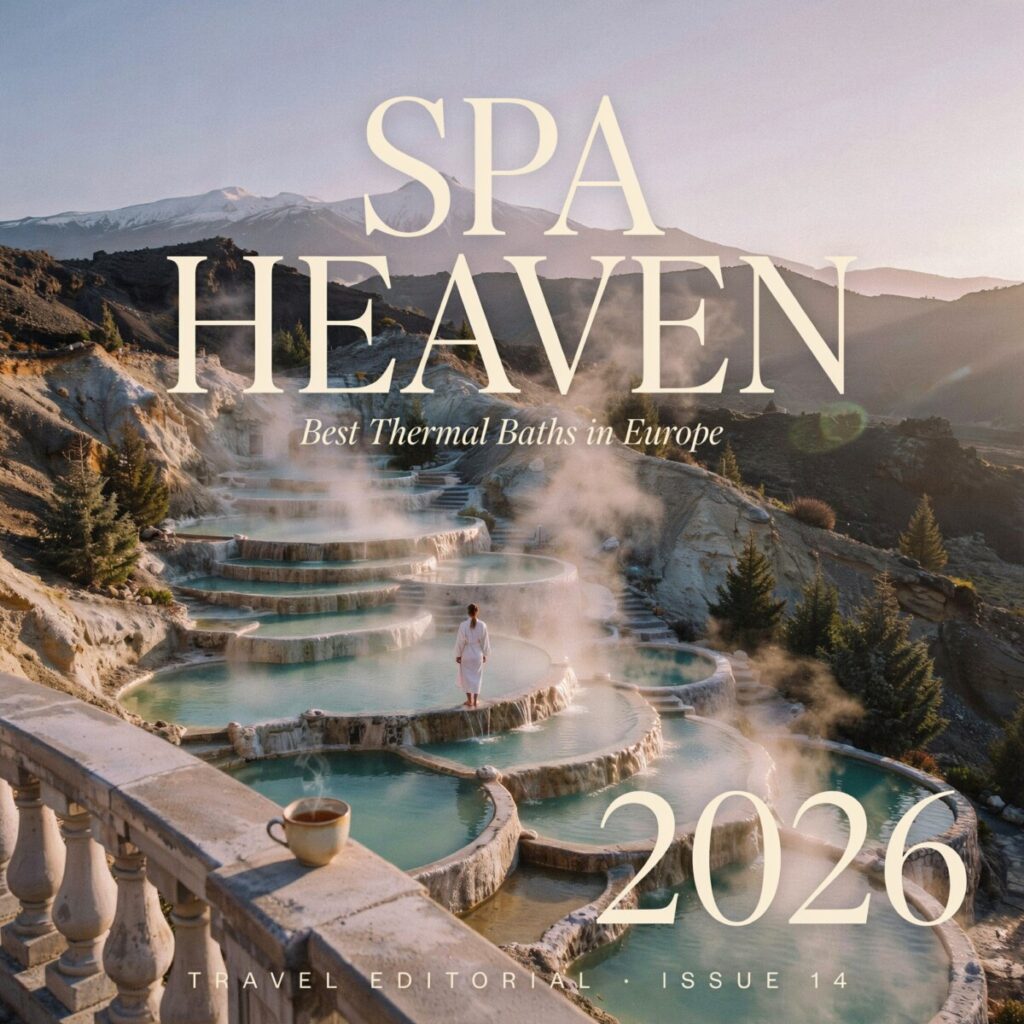
In 2026, the global wellness revolution has officially moved from a luxury niche to a travel necessity. For US travelers seeking to disconnect, decompress, and rejuvenate, thermal baths Europe 2026 are the ultimate antidote to burnout. Steeping in mineral-rich, geothermally heated waters isn’t just a spa day; it’s a centuries-old practice with proven health benefits of thermal waters, including improved circulation, muscle recovery, and deep stress relief. Whether you crave the architectural drama of historic baths Europe or the sleek, modern design of Nordic geothermal lagoons, European spa towns offer an unparalleled blend of healing and heritage.
In this guide, we’ll explore the best thermal baths Europe has to offer, from grandiose palaces of steam in Budapest to wild, natural thermal springs Europe hides in the Tuscan hills. We’ve curated a mix of upscale spa resorts Europe and accessible public gems perfect for your next thermal spa itinerary Europe.
“Soak in history: Europe’s thermal baths offer healing waters, architectural drama, and the slow rhythm of self-care.”
Széchenyi Thermal Bath (Budapest, Hungary)
History & Vibe: Built in 1913, this Neo-Baroque masterpiece is the crown jewel of Budapest’s bathing culture. The grand thermal baths architecture and vibrant yellow facade make it a photographer’s dream.
Standout Features: 18 pools, including massive outdoor thermal pools and saunas, where locals famously play chess on floating boards while soaking in 38°C (100°F) waters.
Best For: Thermal baths for couples, socializing, and architecture lovers.
Signature Treatments: Try a traditional thermal spa massage or a “pedal bath” for foot circulation.
Practical Info: Day passes range from $25–$45 USD. Fly into Budapest (BUD) and take the historic Metro Line 1 directly to the door.
Best Time to Visit: Early morning on a weekday to avoid cruise ship crowds.
- Insider Tip: Rent a private cabin for the day to stash your belongings, nap between soaks, and enjoy a bit of privacy in this bustling social hub.
- Official Site: szechenyibath
Myvatn Nature Baths (North Iceland)
History & Vibe: Opened in 2004, this remote gem draws from the Bjarnarflag geothermal power station, offering a wilder, quieter alternative to Iceland’s busier southern lagoons.
Standout Features: Milky blue, alkaline waters rich in sulfur, surrounded by raw volcanic landscapes and natural steam vents.
Best For: Solo wellness travel, nature lovers, and those avoiding massive crowds.
Signature Treatments: In-water massages and invigorating geothermal steam baths carved directly into the earth.
Practical Info: Entry is approximately $45–$60 USD. Fly from Reykjavik to Akureyri (AEY) and rent a car for a scenic drive.
Best Time to Visit: Summer for the midnight sun, or winter for a chance at the Northern Lights.
- Insider Tip: Visit during the midnight sun in June for an ethereal, endless golden-hour soak that feels entirely removed from time.
- Official Site: myvatnnaturebaths.is
Thermae Bath Spa (Bath, England)
History & Vibe: Opened in 2006, this modern glass-and-stone structure sits harmoniously beside the ancient Roman Baths, blending contemporary luxury with UNESCO World Heritage history.
Standout Features: A stunning rooftop pool overlooking Bath Abbey, indoor mineral pools, and aromatic steam rooms infused with local botanicals.
Best For: A romantic spa weekend Europe, couples, and history buffs.
Signature Treatments: The signature “Thermal Bathing Ritual” followed by a hot stone massage using Wiltshire lavender oils.
Practical Info: Twilight and rooftop access ranges from $50–$90 USD. Fly into London (LHR/LGW) and take a 90-minute direct train to Bath Spa.
Best Time to Visit: Dusk, when the city lights twinkle below the rooftop pool.
- Insider Tip: Book the Twilight Package to experience the rooftop pool illuminated against the night sky, complete with a complimentary glass of English sparkling wine.
- Official Site: thermaebathspa.com
Karlovy Vary (Czech Republic)
History & Vibe: Founded in 1358 by Holy Roman Emperor Charles IV, this is the quintessential European spa town, once favored by Beethoven and royalty.
Standout Features: Stunning pastel colonnades housing 12 main drinking springs, elegant promenades, and luxury hotels offering medical thermal baths (balneotherapy).
Best For: Culture seekers, medical wellness, and travelers seeking a slower pace.
Signature Treatments: Mineral water drinking cures and carbon dioxide baths to boost circulation.
Practical Info: Colonnade access is free; spa day packages run $30–$80 USD. Fly into Prague (PRG) and take a 2-hour luxury bus or train.
Best Time to Visit: Spring or early Autumn when the surrounding forests are vibrant and the air is crisp.
- Insider Tip: Buy a traditional, uniquely spouted porcelain spa cup to sip the hot mineral springs as you stroll the colonnades—the spout cools the water as you drink.
- Official Site: karlovyvary.cz
Friedrichsbad & Caracalla Spa (Baden-Baden, Germany)
History & Vibe: With Roman origins, Baden-Baden became a 19th-century playground for the elite. Friedrichsbad (1877) preserves the classic Roman-Irish bathhouse tradition, while Caracalla offers modern luxury.
Standout Features: Friedrichsbad features historic frescoed halls; Caracalla boasts expansive modern thermal pools and saunas with glass walls overlooking the Black Forest.
Best For: Wellness purists, solo travelers, and those interested in strict thermal bath etiquette.
Signature Treatments: The legendary 17-stage Roman-Irish bathing ritual at Friedrichsbad (involving hot air, steam, plunge pools, and massage).
Practical Info: $40–$60 USD for day passes. Fly into Strasbourg (SXB) or Frankfurt (FRA) and take a regional train.
Best Time to Visit: Weekday mornings for absolute tranquility.
- Insider Tip: Friedrichsbad is strictly “textile-free” (nude). Leave your modesty at the door and embrace the authentic German spa culture—it is entirely normal and deeply relaxing!
- Official Site: baden-baden.de
“Pack a swimsuit and a sense of wonder — Europe’s best thermal springs turn downtime into destination time.”
Bormio Thermal Baths (Italian Alps)
History & Vibe: Known since Roman times and favored by Leonardo da Vinci, Bormio sits high in the Italian Alps, merging alpine ruggedness with Italian luxury.
Standout Features: The QC Terme Bormio resort features outdoor pools where you can literally soak in steaming water while surrounded by snow-capped peaks and pine forests.
Best For: Active travelers, ski-trip recovery, and luxury seekers.
Signature Treatments: Alpine mud wraps, hydrotherapy circuits, and botanical saunas.
Practical Info: Day passes are roughly $70–$110 USD. Fly into Milan (MXP) and rent a car or take a scenic train/bus into the Valtellina valley.
Best Time to Visit: Deep winter for “snow-soaking,” or summer for hiking recovery.
- Insider Tip: Visit the outdoor pools in the dead of winter; the contrast between the freezing alpine air and the 38°C mineral water is an unforgettable sensory shock.
- Official Site: qcterme.com
Saturnia Terme (Tuscany, Italy)
History & Vibe: Legend says these springs were formed by a lightning bolt from the god Saturn. The Etruscans and Romans bathed here, and today it remains a premier destination for natural hot springs Europe.
Standout Features: The Cascate del Mulino—free, cascading natural sulphur springs flowing over travertine terraces—plus an adjacent luxury resort.
Best For: Budget travelers, Instagrammers, and nature lovers.
Signature Treatments: Natural mud baths at the public cascades, or upscale thermal spa treatments at the resort.
Practical Info: The natural cascades are 100% free. Resort day passes range from $90–$140 USD. Fly into Rome (FCO) or Florence (FLR) and rent a car.
Best Time to Visit: Early morning, year-round (the water is a constant 37.5°C/99°F).
- Insider Tip: Arrive at the Cascate del Mulino at sunrise to avoid the midday crowds and capture the mystical steam rising over the terraced pools.
- Official Site: termedisaturnia.it
Vichy (France)
History & Vibe: Napoleon III established Vichy as a premier spa destination in the 19th century. Today, it remains the epicenter of French dermatological and digestive wellness.
Standout Features: Elegant Belle Époque architecture, the Vichy Thermal Spa, and a town built entirely around its celebrated mineral springs Europe.
Best For: Luxury wellness, medical thermal baths, and solo restorative retreats.
Signature Treatments: The world-famous “Vichy Shower” (a multi-jet hydrotherapy massage) and customized thermal cures.
Practical Info: Spa packages range from $150–$400+ USD. Fly into Paris (CDG) or Lyon (LYS) and take a direct TGV train (approx. 2.5 hours).
Best Time to Visit: Spring or early Autumn when the town’s lush parks are in full bloom.
- Insider Tip: Bring an empty bottle to the celebrated Célestins spring pavilion to drink the mineral-rich waters from the inside out, just as locals have done for centuries.
- Official Site: vichy-spa-hotel.fr
Rogaška Slatina (Slovenia)
History & Vibe: Boasting a 400-year tradition of health and wellness, this lush, green resort town is Slovenia’s most famous spa destination.
Standout Features: Expansive parklands, grand Habsburg-era architecture, and the world’s most magnesium-rich water, Donat Mg.
Best For: Digestive health, budget-friendly luxury, and quiet, restorative escapes.
Signature Treatments: Donat Mg drinking cures, physiotherapy, and medical thermal baths.
Practical Info: Day and resort access ranges from $60–$150 USD. Fly into Ljubljana (LJU) and enjoy a short 90-minute drive through the Slovenian countryside.
Best Time to Visit: Autumn, when the surrounding hills turn brilliant shades of gold and red.
- Insider Tip: Incorporate the Donat Mg water into your daily routine; its exceptionally high magnesium content is a game-changer for digestion, muscle cramps, and stress relief.
- Official Site: rogaska.si
The “Imperial Wellness” Itinerary: 9 Days of Restoration
If you want to chain multiple destinations without spending your whole trip in transit, the Imperial Wellness Loop connects three legendary European spa towns via easy trains and short drives.
- Days 1–3: Baden-Baden, Germany. Arrive in Frankfurt and train to the Black Forest. Spend your first two days alternating between the modern Caracalla Spa and the historic, nude Friedrichsbad. Dedicate Day 3 to light hiking in the Black Forest and a restorative thermal mud wrap.
- Days 4–6: Karlovy Vary, Czech Republic. Take a scenic train or private transfer across the border (approx. 3 hours). Shift your focus from soaking to internal wellness. Stroll the colonnades, sip the mineral springs, and book a traditional carbon dioxide bath. Enjoy the town’s famous wafer cookies and slow, aristocratic pace.
- Days 7–9: Budapest, Hungary. Fly from Prague to Budapest (a quick 1-hour flight). Check into a boutique hotel in the Buda Hills. Spend your final days soaking in the grand outdoor pools of Széchenyi and the Art Nouveau interiors of the Gellért Baths. End your trip with a private thermal bath and a glass of Hungarian Tokaji wine.
Pacing Tip: Alternate “active” sightseeing mornings with “passive” thermal soaking afternoons. Thermal baths wellness travel is about lowering your cortisol; don’t rush from the sauna to a museum!
Practical Planning & Thermal Bath Booking Tips
Navigating European spa culture can be a culture shock for US travelers. Here is what you need to know before you pack your bags.
Thermal Bath Booking Tips & Reservations:
In 2026, wellness travel demand is at an all-time high. Popular spots like the Blue Lagoon, Thermae Bath Spa, and QC Terme Bormio require advance online reservations, often selling out weeks ahead. Book your entry slots before your transatlantic flight.
Dress Codes and Thermal Bath Etiquette:
This is the biggest hurdle for Americans. In the UK, Italy, and Hungary, swimsuits are mandatory. However, in Germany, Austria, and Slovenia, traditional saunas and certain historic baths are textilfrei (textile-free/nude). Mixed-gender nude bathing is strictly non-sexual, deeply hygienic, and expected. If you are uncomfortable, look for “Textile Days” or stick to the swimsuit-required zones (like Caracalla instead of Friedrichsbad).
Health, Accessibility, and Visas:
- Visas: The European ETIAS visa waiver system is fully operational in 2026. US citizens must apply online weeks before departure and ensure passports are valid for at least six months beyond their stay.
- Health: Thermal waters can lower blood pressure and cause dehydration. Limit initial soaks to 15–20 minutes and drink plenty of water. Those with heart conditions should consult a doctor before visiting.
- Accessibility: Modern resorts (like Caracalla or Thermae Bath Spa) offer excellent wheelchair access and pool hoists, but historic baths Europe (like Saturnia’s natural rocks or old Budapest stairwells) may pose mobility challenges. Check official sites for accessibility maps.
Tipping and Currency:
While the Euro (€) is standard across most of this list, Hungary and the Czech Republic use their own currencies (Forint and Koruna). Credit cards are widely accepted, but keep small cash for tips. In European spas, it is customary to tip the locker attendant or massage therapist €2–€5 for good service.
“True luxury isn’t just a plush robe; it’s the centuries-old alchemy of hot water, minerals, and time.”
What to Pack: The Spa-Goer’s Checklist
Leave the heavy work clothes at home and make room for these essentials:
- Two Swimsuits: (One to wear, one drying—essential for multi-soak days).
- Flip-flops / Water Shoes: Mandatory for hygiene and navigating hot decking.
- Lightweight Travel Robe: Many historic baths don’t provide robes for basic entry tickets.
- Reusable Water Bottle: Hydration is critical in saunas and thermal pools.
- Heavy Moisturizer: Sulfur and mineral waters can dry out the skin.
- Universal Travel Adapter: (Type C/G depending on your route).
- Travel Insurance Documents: Ensure your policy covers international medical and wellness tourism.
Conclusion
Whether you are seeking the healing mud of Tuscany, the architectural majesty of Budapest, or the silent, snowy steam of the Alps, prioritizing wellness travel 2026 is the greatest gift you can give your body and mind. Europe’s thermal waters have been drawing weary travelers for millennia, offering a sanctuary where time slows down and healing begins.
Ready to book your thermal escape? Pin this guide and start planning your Spa Heaven 2026 trip today.