
Why Glacier Treks Are the Ultimate 2026 Adventure Trend
As the world emerges from years of constrained travel, U.S. adventurers are seeking transformative experiences that blend raw natural beauty with meaningful connection. Enter glacier treks—the pinnacle of 2026’s adventure travel revolution. With the solar maximum amplifying Northern Lights displays through 2026 and travelers prioritizing immersive, slow-paced journeys over checklist tourism, glacier destinations offer the perfect fusion of awe-inspiring scenery and emotional resonance.
Unlike crowded resorts or generic sightseeing, glacier hiking demands presence. You’ll feel the crunch of ice under your crampons, hear the ancient groan of shifting ice fields, and witness landscapes reshaped by millennia of natural forces. For U.S. travelers craving bucket list destinations that deliver both adrenaline and introspection, these frozen frontiers represent the ultimate nature escape.
This guide explores the coolest glacier trekking destinations to prioritize for 2026—curated for accessibility, unique 2026 appeal, and unforgettable moments. Whether you’re a seasoned mountaineer or a first-time ice trekking enthusiast, these journeys redefine adventure.
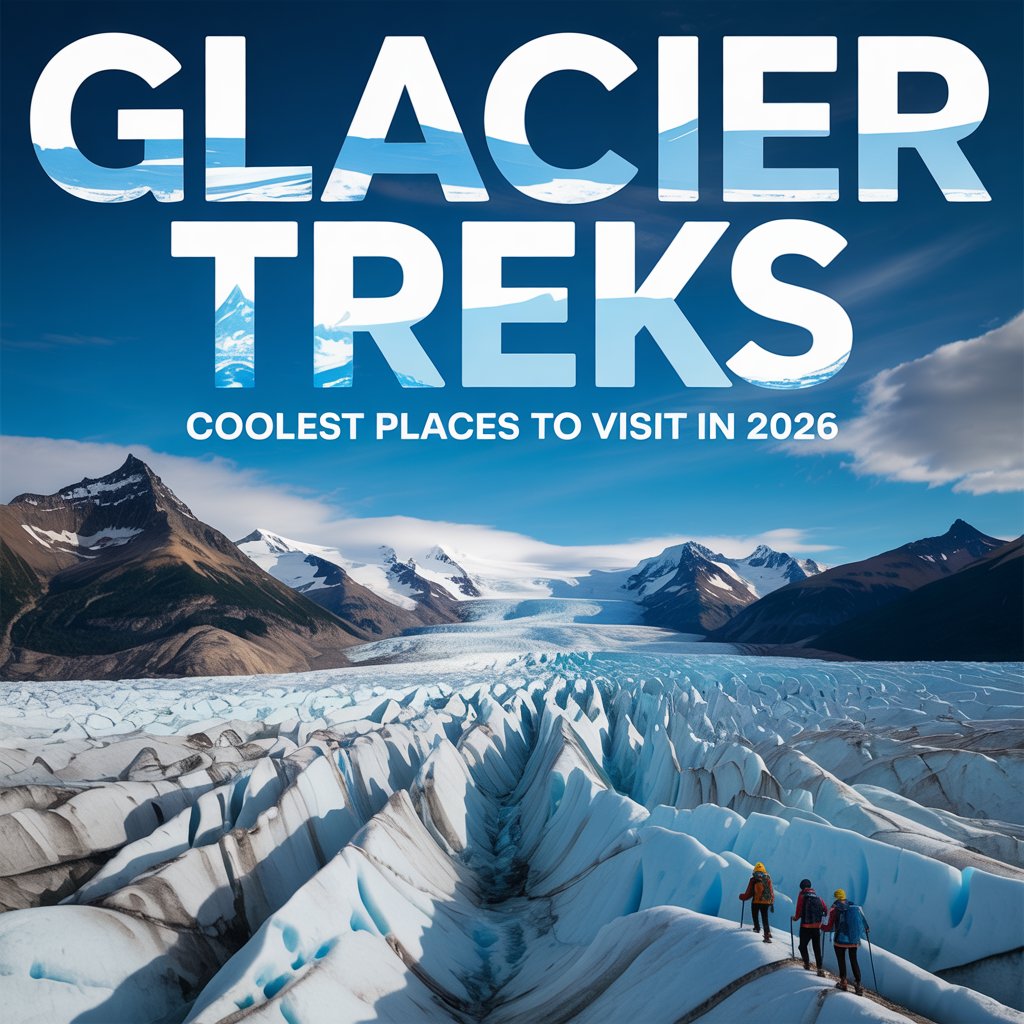
🌊 Why Glacier Treks Dominate 2026 Travel Trends
The 2026 surge in glacier treks isn’t accidental. Three key factors converge:
- The Solar Maximum Effect: NASA confirms peak solar activity through late 2026, intensifying Northern Lights visibility across Arctic destinations like Iceland and Norway—adding celestial drama to winter glacier adventures.
- Demand for “Slow Adventure”: Post-pandemic travelers reject rushed itineraries. Glacier trekking—where you move with the landscape, not through it—embodies the “pause for purpose” wellness trend highlighted by Exodus Travels.
- Climate Urgency: As glaciers recede globally, travelers seek to witness these wonders before they change. Responsible tourism operators now emphasize sustainable travel tips to protect these fragile ecosystems.
💡 Pro Tip: Book 2026 trips early! Backroads reports glacier-focused itineraries (like Patagonia’s W Trek) are selling 170% faster than 2024 due to heightened demand for “authentic cold-weather travel.”
🏔️ Top 7 Glacier Trekking Destinations for 2026
1. Alaska, USA: Denali’s Frozen Majesty
Why it’s special in 2026: Alaska’s glaciers are accelerating their retreat, making 2026 a critical window to experience Denali’s ice fields before significant transformation. New guided routes now access the Harding Icefield—North America’s largest ice cap—via helicopter-assisted treks, minimizing environmental impact.
- Best time to visit: May–September (July offers optimal daylight; September brings aurora potential).
- Difficulty: Moderate to strenuous (guided treks required; self-guided prohibited on active glaciers).
- 2026 highlight: The “Glaciers & Denali” tour (Backroads) includes a heli-hike onto the ice with National Park rangers explaining climate science firsthand.
- What to expect: Ice caves, crevasses, and views of Denali’s 20,310-foot summit. Spot grizzly bears fishing for salmon near Exit Glacier.
- Safety tip: Always travel with a guide trained in crevasse rescue. Temperatures can drop to −10∘C even in summer.
🌐 U.S. Traveler Insight: Fly into Anchorage (direct flights from Seattle/LA). Most tours include gear—just pack moisture-wicking layers and
hiking bootsrated for sub-zero temps.
2. Iceland: Fire, Ice & Northern Lights
Why it’s special in 2026: With solar activity at a 20-year high, Iceland’s winter Northern Lights displays will be exceptionally vivid—visible even from glacier lagoons. New eco-lodges near Vatnajökull Glacier now offer aurora-viewing saunas after daytime ice trekking.
- Best time to visit: September–March for lights; June–August for midnight sun treks.
- Difficulty: Beginner-friendly (glacier walks require no prior experience; ice caving is moderate).
- 2026 highlight: The “Journeys: Explore Iceland” tour (Bookmundi) combines glacier hikes with lava cave explorations and black-sand beach yoga—perfect for the “wellness travel” trend.
- What to expect: Blue ice caves, glacial rivers, and volcanic landscapes. In 2026, operators add “climate storytelling” sessions about Iceland’s receding glaciers.
- Safety tip: Avoid solo ice caving—hidden crevasses are common. Always wear helmets and
trekking poleson icy terrain.
🌐 U.S. Traveler Insight: Direct flights from NYC/Boston to Reykjavik take 5.5 hours. Budget $1,800–$2,500 for a 7-day guided tour (flights extra).
3. Patagonia: Where Glaciers Meet the Andes
Why it’s special in 2026: Chile’s Torres del Paine National Park now limits daily hikers to 120 (down from 200), making 2026 treks more exclusive. Argentina’s Perito Moreno Glacier is advancing (rare globally), offering dramatic calving events perfect for photography.
- Best time to visit: November–March (Southern Hemisphere summer).
- Difficulty: Strenuous (W Trek requires 5–7 days; Fitz Roy base trek is moderate).
- 2026 highlight: The “Wonders of Patagonia” tour (Bookmundi) includes a private boat to glacier fronts and gaucho (cowboy) cultural experiences.
- What to expect: Towering ice walls, turquoise lagoons, and windswept steppes. In 2026, new trails bypass crowded viewpoints.
- Safety tip: Pack windproof layers—Patagonian gusts exceed 100 km/h. Use
cramponseven on “easy” glacier walks.
🌐 U.S. Traveler Insight: Fly into Punta Arenas (Chile) via Santiago. Book park permits 6+ months ahead—Backroads notes 90% sell out by January 2026.
4. Canadian Rockies: Icefields Parkway Perfection
Why it’s special in 2026: Banff’s Columbia Icefield Skywalk reopens in 2026 with upgraded glass-bottom platforms after renovations. New Indigenous-led tours share Blackfoot Nation stories about glacier spirits—aligning with 2026’s focus on cultural immersion.
- Best time to visit: June–September (July has wildflowers; September has fewer crowds).
- Difficulty: Easy to moderate (Ice Explorer vehicles access Athabasca Glacier; guided walks are flat).
- 2026 highlight: The “Canadian Rockies & Glacier National” tour (Bookmundi) includes a Jammer bus ride through Glacier NP and stargazing at Lake Louise.
- What to expect: Emerald lakes, grizzly sightings, and walking on 700-foot-thick ice.
- Safety tip: Never walk on glaciers without guides—crevasses are often snow-covered. Wear
hiking bootswith ankle support.
🌐 U.S. Traveler Insight: Drive the Icefields Parkway from Calgary (3 hours). Tours start at $1,200 for 4 days (includes Canadian/American park access).
5. Swiss Alps: Glacier Express & Beyond
Why it’s special in 2026: Switzerland’s Aletsch Glacier—a UNESCO site—now offers “zero-carbon” cogwheel train access to viewing platforms. The Glacier Express rail journey (voted #1 in Exodus’ 2026 trends) pairs train travel with hut-to-hut trekking.
- Best time to visit: June–October (July–August for hiking; September for alpine flowers).
- Difficulty: Moderate (well-marked trails; high-altitude sections require fitness).
- 2026 highlight: The “Alpine Glacier Traverse” combines the Glacier Express with guided hikes on the Morteratsch Glacier—featuring 2026’s trend of “rail-led adventures.”
- What to expect: Panoramic views of the Matterhorn, glacial lakes, and Edelweiss-covered slopes.
- Safety tip: Altitude sickness is common above 2,500 m. Acclimatize for 24 hours before trekking.
🌐 U.S. Traveler Insight: Fly into Zurich. Swiss Travel Pass covers trains/buses—budget $200–$300/day for guided trek add-ons.
6. New Zealand: Franz Josef’s Rainforest Glacier
Why it’s special in 2026: Franz Josef is the most accessible glacier on Earth—dropping from 12,000 feet to rainforest at 900 feet. In 2026, new heli-hike protocols reduce group sizes to 6 people for intimate ice exploration.
- Best time to visit: Year-round (summer for mild temps; winter for fewer crowds).
- Difficulty: Moderate (heli-hikes require basic fitness; valley walk is easy).
- 2026 highlight: Heli-hikes now include glacier geology workshops—guides use ice cores to explain climate change.
- What to expect: Ice caves, crevasses, and views of the Southern Alps from the valley walk.
- Safety tip: Weather changes rapidly—always carry waterproof layers.
Cramponsare provided on guided tours.
🌐 U.S. Traveler Insight: Fly into Queenstown, then drive 4 hours. Heli-hikes cost $450–$550; book 3+ months ahead for 2026.
7. Norway: Fjords & Glacier Valleys
Why it’s special in 2026: Norway’s Jostedalsbreen Glacier now offers “aurora glacier walks” in winter—combining ice trekking with prime Northern Lights viewing under the solar maximum.
- Best time to visit: May–September for hiking; February–March for aurora/glacier combos.
- Difficulty: Moderate (fjord treks are well-marked; glacier walks require guides).
- 2026 highlight: The “Norway Fjord Trekking” tour (Bookmundi) ends with a soak in geothermal springs after hiking the Nigardsbreen Glacier.
- What to expect: Waterfalls cascading over ice, deep-blue crevasses, and Viking-era landscapes.
- Safety tip: Use
trekking poleson slippery paths. Avoid glacier edges—meltwater rivers shift daily.
🌐 U.S. Traveler Insight: Fly into Bergen. Summer tours start at $1,600 for 7 days; winter aurora packages cost $2,200+.
🎒 Essential Glacier Trekking Advice for U.S. Travelers
How to Prepare for Your Glacier Adventure
- Fitness requirements: Train with weighted hikes 3 months pre-trip. Aim to comfortably carry 15–20 kg for 5+ miles.
- Gear checklist:
Hiking boots(insulated, waterproof, broken in)Crampons(most guided tours provide—but verify!)Trekking poles(collapsible for travel)- Moisture-wicking base layers + insulated puffer jacket
- Guided vs. self-guided: Always choose guided for glacier treks. U.S. National Park Service data shows 87% of glacier accidents involve unguided travelers.
Budget Breakdown (Per Person)
| Expense | Guided Tour | Self-Guided |
|---|---|---|
| Tour Cost | $1,200–$3,500 | $400–$800 (park fees/gear rental) |
| Flights (USA) | $600–$1,200 | $600–$1,200 |
| Gear Rental | Included | $150–$300 |
| Total | $1,800–$4,700 | $1,150–$2,300 |
💡 2026 Savings Tip: Book “trip stacking” with Backroads—combine Patagonia with Chilean wine country for 15% off.
Sustainable Travel Practices
- Choose operators with GLACIER CERTIFIED eco-standards (e.g., zero single-use plastics).
- Stay on marked trails—glacier ecosystems recover slowly from foot traffic.
- Support Indigenous-owned tours (e.g., Blackfoot guides in Banff).
❄️ Final Thoughts: Your 2026 Glacier Journey Awaits
Glacier treks in 2026 offer more than stunning photos—they deliver profound connection. As you stand on ice older than human civilization, hearing the creak of ancient glaciers underfoot, you’ll understand why these journeys top every adventure travel bucket list.
With solar maximum-enhanced auroras, improved sustainable access, and record-low crowd levels at key sites, 2026 is the optimal year to go. Whether you’re tracing crevasses on Alaska’s Harding Icefield or soaking in Norwegian hot springs after a fjord trek, these frozen frontiers promise transformation.
Your move: Start planning now. Top operators report 60% of 2026 glacier slots are already reserved. Download our free Glacier Trekking Checklist with gear lists, booking timelines, and 2026-specific safety tips. The ice is calling—will you answer?