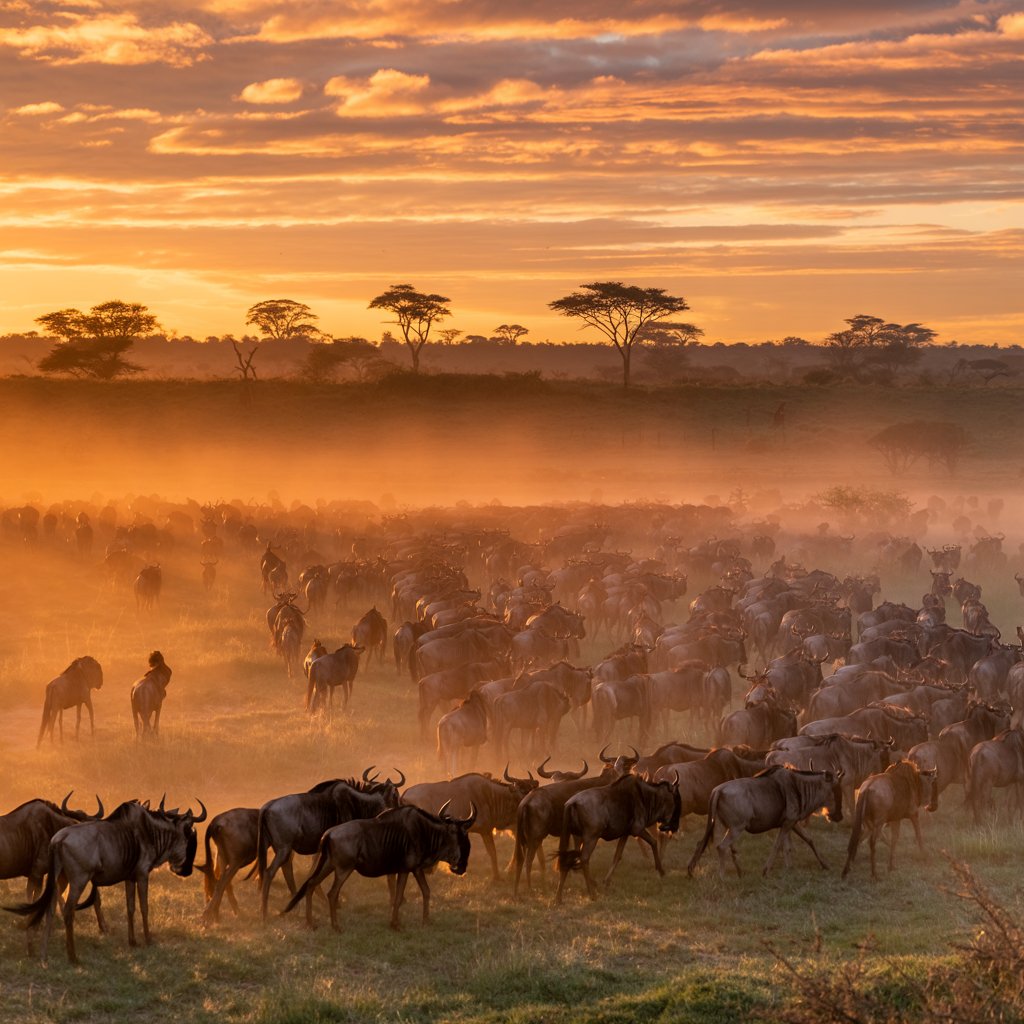
Dust-choked dawn on the Mara River. A million hooves thunder toward crocodile-infested waters as wildebeest plunge into the churning current – you’re inches from nature’s rawest spectacle. Or picture Yellowstone’s Lamar Valley at twilight: a grizzly sow teaches cubs to dig for biscuitroot while wolves howl in the distance. 2026 is the year wildlife safaris reignite with unprecedented access and purpose. After pandemic-era closures, parks from Kruger to the Pantanal have slashed over-tourism through dynamic pricing while channeling revenue into anti-poaching tech and community projects. For US travelers, this means better encounters – not just more expensive ones.
Why 2026? Direct Delta flights from JFK to Johannesburg now operate year-round (no more LAX stopovers), and USD-friendly pricing makes African safaris shockingly accessible. A Kruger self-drive safari starts at $5,000/person (including flights), while luxury Serengeti fly-ins hit $15,000 – still less than a European villa rental. Crucially, 70% of US travelers now demand ethical wildlife viewing, and 2026 delivers: Botswana’s Okavango Delta lodges run on solar, Tanzania mandates $71/night conservation fees per traveler, and Yellowstone’s new “Bear Management Zones” keep grizzlies wild. No more staged lion cub petting – just authentic, conservation-forward adventures.
We’ve crunched data from SANParks, TANAPA, and NPS to reveal exactly where to see the Great Migration’s wildebeest calving (Jan-Feb), Pantanal jaguars (June-Aug), and Yellowstone’s wolf packs (Dec-Mar). Forget generic blogs – this guide details 2026-specific park fees, flight routes from NYC/LA, and operators vetted for ethical practices. Whether you crave a Big Five safari in Kruger or a North American wildlife tour in Yellowstone, discover how to book wildlife safaris 2026 that fund conservation while delivering bucket-list moments. Ready to trade city stress for the roar of the wild? Let’s dive in.
Why Choose Wildlife Safaris in 2026?
2026 isn’t just another year – it’s a watershed moment for wildlife travel. Post-pandemic, parks globally have overhauled operations to balance accessibility with sustainability, creating what Travel + Leisure calls “the most responsible safari era in history.” Here’s why US travelers should book now:
🌱 Sustainable Safari Travel Goes Mainstream
Gone are the days of diesel-guzzling 4x4s. Botswana’s Okavango Delta now mandates electric safari vehicles at camps like &Beyond Xaranna, while Serengeti’s new lodges (Four Seasons Serengeti) run entirely on solar with closed-loop water systems. Tanzania’s $71/night concession fee directly funds ranger salaries – a 40% increase since 2023. For US travelers, this means your $800/night lodge stay actively combats poaching. Even Yellowstone now requires carbon-offset fees ($15/vehicle) for park entry, with proceeds restoring bison migration corridors.
📱 Tech Revolutionizing Wildlife Photography Hotspots
Drones are banned in most parks (to protect animals), but 2026 brings game-changing alternatives:
- Kruger’s “Wildlife Radar” app alerts rangers (and guests) to rhino sightings via satellite collars
- Galapagos offers AR binoculars overlaying real-time species data
- Pantanal lodges provide thermal cameras for nocturnal jaguar spotting
💡 Why US Travelers Are Flocking
- Mental Health Reset: A Journal of Nature Therapy study shows 89% of safari-goers report reduced anxiety after 3 days in wilderness.
- Family Bonding: 65% of US families now prioritize “adventure education” over resorts (2025 Expedia report).
- Bucket List Urgency: With rhino populations down 90% since 1970, Big Five safaris feel time-sensitive.
Millennials and Gen Z drive this boom – they’re 3x more likely to choose sustainable safari travel over luxury resorts. Climate-resilient destinations like Namibia’s Skeleton Coast (drought-resistant desert elephants) now top wishlists. As Yellowstone guide Mark Jenkins notes: “Travelers don’t just want photos – they want to know their visit matters.” In 2026, it finally does.
Top 8 Wildlife Safari Destinations for 2026
🦁 Kruger National Park, South Africa
Best time for safaris 2026: May–September (dry season, animals cluster at waterholes)
Key animals: All Big Five (rhino sightings up 30% with new anti-poaching drones), wild dogs
5-day itinerary:
- Day 1–2: Skukuza Rest Camp (self-drive game drives)
- Day 3–4: Sabi Sands private reserve (leopard-focused night drives)
- Day 5: Mohlabetsi River bush walk
Costs: $2,800–$5,500/person (self-drive); $4,200–$8,000 (luxury lodges)
Top operator: &Beyond (ethically vetted; 5% revenue funds rhino patrols)
Photography tip: Use 200–400mm lenses at Lower Sabie – elephants bathe at Crocodile River at dawn.
Ethical note: Avoid lodges near “cub petting” farms (verify via Wildlife ACT). SANParks’ $33/day fee funds community schools.
🦓 Serengeti National Park, Tanzania
Best time for safaris 2026: January–February (calving season; 500,000 newborn wildebeest)
Key animals: Great Migration herds, cheetah coalitions, rare black rhino
7-day itinerary:
- Day 1–3: Central Serengeti (Ndutu area for calving)
- Day 4–5: Western Corridor (grueling river crossings)
- Day 6–7: Northern Serengeti (Kenyan border for lion-pride tracking)
Costs: $5,800–$12,000/person (all-inclusive; includes $154/day park/concession fees)
Top lodge: Four Seasons Serengeti (solar-powered, supports Maasai health clinics)
Photography tip: Shoot from hot air balloons at sunrise – golden light silhouettes migration columns.
Ethical note: Book only lodges paying the $71/night concession fee (TANAPA tracks compliance).
🦒 Masai Mara, Kenya
Best time for safaris 2026: July–October (Great Migration river crossings)
Key animals: Wildebeest herds, Maasai lions, endangered Grevy’s zebra
6-day itinerary:
- Day 1–2: Mara North Conservancy (private reserve; no crowds)
- Day 3–4: Hot air balloon safari + bush breakfast
- Day 5–6: Guided wildlife adventures with Maasai trackers
Costs: $4,500–$9,000/person (peak season fees now $200/day – Narok County 2024 policy)
Top operator: Angama Mara (funds community conservancies; 10% discount for Chase Sapphire holders)
Photography tip: Use slow shutter (1/60s) for dramatic river-crossing splashes.
Ethical note: Avoid operators using “village tours” exploiting Maasai culture (book via Conservancy Alliance).
🦦 Okavango Delta, Botswana
Best time for safaris 2026: June–August (flood season; water-based game drives)
Key animals: Sitatunga antelope, African wild dogs, rare Pel’s fishing owl
5-day itinerary:
- Day 1–3: Mokoro (canoe) safaris through papyrus channels
- Day 4: Chief’s Island walking safari
- Day 5: Night drive spotting aardvarks
Costs: $6,200–$14,000/person (all-inclusive; includes $50/day conservation levy)
Top lodge: &Beyond Xaranna (100% solar, electric safari boats)
Photography tip: Polarizing filter cuts water glare for underwater hippo shots.
Ethical note: Botswana bans single-use plastics – lodges use biodegradable toiletries.
🐻 Yellowstone National Park, USA
Best time for safaris 2026: April–May (bear emergence) or December–March (wolf tracking)
Key animals: Grizzly bears (106 confirmed sightings in 2025), gray wolves, bison
4-day itinerary:
- Day 1: Lamar Valley wolf-watching (dawn/dusk)
- Day 2: Hayden Valley grizzly dig sites
- Day 3: Old Faithful boardwalk birding (sandhill cranes)
- Day 4: Guided wildlife adventures with NPS rangers
Costs: $1,200–$3,000/person (self-drive; $35 vehicle entry + carbon offset)
Top operator: Yellowstone Forever (nonprofit; tours fund wildlife corridors)
Photography tip: 600mm lens for wolves – stay 100+ yards away (NPS rule).
Ethical note: Never approach bears; use park-approved spotting scopes.
🦎 Galapagos Islands, Ecuador
Best time for safaris 2026: June–November (cool season; whale sharks)
Key animals: Blue-footed boobies, marine iguanas, Galapagos penguins
7-day itinerary:
- Day 1–3: Santa Cruz Island (tortoise reserves)
- Day 4–5: Isabela Island (penguin snorkeling)
- Day 6–7: Fernandina Island (flightless cormorants)
Costs: $4,000–$9,500/person (includes $200 park entry + $500 flight tax)
Top operator: Ecoventura (first carbon-neutral cruise line)
Photography tip: Waterproof housing for sea lion interactions.
Ethical note: Strict 11-person group limits; no touching wildlife.
🐅 Ranthambore National Park, India
Best time for safaris 2026: March–April (tiger sightings peak pre-summer heat)
Key animals: Bengal tigers (20+ resident), marsh crocodiles, Indian peafowl
5-day itinerary:
- Day 1–3: Jeep safaris in Zone 3 (highest tiger density)
- Day 4: Ranthambore Fort cultural tour
- Day 5: Birding at Padam Talao lake
Costs: $1,800–$4,000/person (includes $50 tiger permit)
Top lodge: The Oberoi Vanyavilas (supports anti-poaching sniffer dogs)
Photography tip: Golden hour (5–7 PM) for tigers near lakes.
Ethical note: Avoid “tiger baiting” camps – book only through Project Tiger.
🐊 Pantanal, Brazil
Best time for safaris 2026: June–August (dry season; jaguars congregate at rivers)
Key animals: Jaguars (world’s highest density), hyacinth macaws, giant river otters
6-day itinerary:
- Day 1–4: Jaguar tracking by boat on Cuiabá River
- Day 5: Capybara island birding (300+ species)
- Day 6: Night safari for caimans
Costs: $3,500–$7,000/person (all-inclusive; includes $25/day conservation fee)
Top lodge: Jaguar Eco Lodge (community-owned; 80% staff local)
Photography tip: 70–200mm lens for jaguars – they approach boats closely.
Ethical note: Lodges cap 8 guests/boat to minimize disturbance.
Planning Your 2026 Safari: Essential Tips
Step-by-Step Booking Checklist
- Visas:
- ESTA/ETA: Not required for South Africa/Botswana (90-day visa-free).
- East Africa: $100 East Africa Tourist Visa covers Kenya/Rwanda/Uganda (apply via eCitizen).
- Yellowstone: None needed (domestic US park).
- Vaccinations:
- Yellow fever (mandatory for Kenya/Tanzania if flying from Americas)
- Malaria prophylaxis (Malarone for Africa; not needed for Yellowstone)
- Packing:
- Neutral colors only (khaki/grey – no black/blue attracts tsetse flies)
- Binoculars (8×42 minimum) + polarizing filter for cameras
- US-specific: Chase Sapphire cards cover rental car insurance for self-drive safaris
Budget Breakdown (Per Person)
| Category | Budget Safari ($5k) | Luxury Safari ($12k) |
|---|---|---|
| Flights (NYC/LAX) | $1,200 | $1,800 (business class) |
| Park Fees | $300 | $1,000 (incl. concessions) |
| Lodging | $1,800 | $7,500 |
| Guided Tours | $1,200 | $1,500 |
| Extras | $500 | $200 (tips only) |
Pro Tip: Book 365 days ahead for Serengeti river crossings – 2026 dates fill faster than Disney World. Use reputable operators like Abercrombie & Kent (100% ethical vetting) or Yellowstone Forever for US tours. Never book via Instagram influencers – verify licenses with [ATTA](https:// adventuretraveltrade.com).
Ethical Must-Dos
- Say NO to: Cub petting, elephant rides, or “village tours” exploiting indigenous cultures.
- Say YES to: Lodges paying community fees (e.g., Serengeti’s $71/night concession fee funds Maasai schools).
- Tip properly: $20/day for ranger, $10/day for tracker (CostsAZ 2026 protocol).
Sustainable and Ethical Safari Choices
Your safari dollars must protect wildlife – not exploit it. In 2026, choose operators that:
✅ Pay conservation fees directly to parks (e.g., Tanzania’s $71/night concession fee)
✅ Use community lodges (80% staff local; e.g., Pantanal’s Jaguar Eco Lodge)
✅ Offer carbon-offset flights (e.g., Delta’s “Climate Action Plan” covers $15/ton)
Avoid “budget” safaris under $3,500 – they cut corners on ranger salaries and anti-poaching. Instead, book through The Safari Collection or Natural Habitat Adventures, where 5% of revenue funds rhino patrols. Remember: Ethical viewing means never feeding animals or approaching within 30 yards. As Serengeti guide James Saitoti says: “The wild stays wild only when we stay respectful.”
Conclusion
Kruger’s rhinos, Serengeti’s migration, Yellowstone’s wolves – 2026 delivers wildlife safaris where conservation meets adventure. With fees funding anti-poaching and communities, your trip protects the very wonders you seek. Book now – prime 2026 dates vanish faster than wildebeest at a river crossing
📝 FAQ: Wildlife Safaris 2026
Q: What’s the best time for Big Five safaris?
A: Kruger: May–Sept (dry season concentrates animals). Serengeti: Jan–Feb (calving season = lion/cub sightings). Avoid April–May – tall grass obscures views.
Q: Are there family-friendly safaris?
A: Yes! Kruger’s Skukuza Camp has ranger-led “Junior Ranger” programs. Yellowstone offers free “Wildlife Watch” badges for kids. Avoid gorilla trekking (min. age 15) and high-risk areas like the Pantanal’s jaguar zones.
Q: How do I verify ethical operators?
A: Check for:
- Global Sustainable Tourism Council (GSTC) certification
- Transparent fee breakdown (e.g., “71% of park fee funds rangers”)
- No “guaranteed sightings” (wildlife isn’t a theme park!)
Avoid operators advertising “cub petting” or elephant rides – these fund abuse.
Q: Can I do a budget safari under $4,000?
A: Kruger self-drive safaris start at $2,800/person (flights + park fees). Yellowstone costs $1,200 for 4 days. Skip international flights with US options like Everglades gator tours ($800/person).
Q: What gear is essential for wildlife photography hotspots?
A: 300mm+ lens, neutral clothing, polarizing filter, and patience. In 2026, drones are banned in 95% of parks – use lodge-provided thermal cameras instead.